The Projected Shadow of Silent Pain.
Addiction is not a moral failure, a bad choice, or a simple lack of willpower. In the modern neuroscience paradigm, it is a profound disorder of connectivity—a disturbance of emotions and behavior.
It is a desperate attempt by the brain to survive, to regulate an overwhelmed nervous system, and to solve the problem of core pain, often rooted in early trauma.
Epigenetics and the Inheritance of Pain
Enter Portal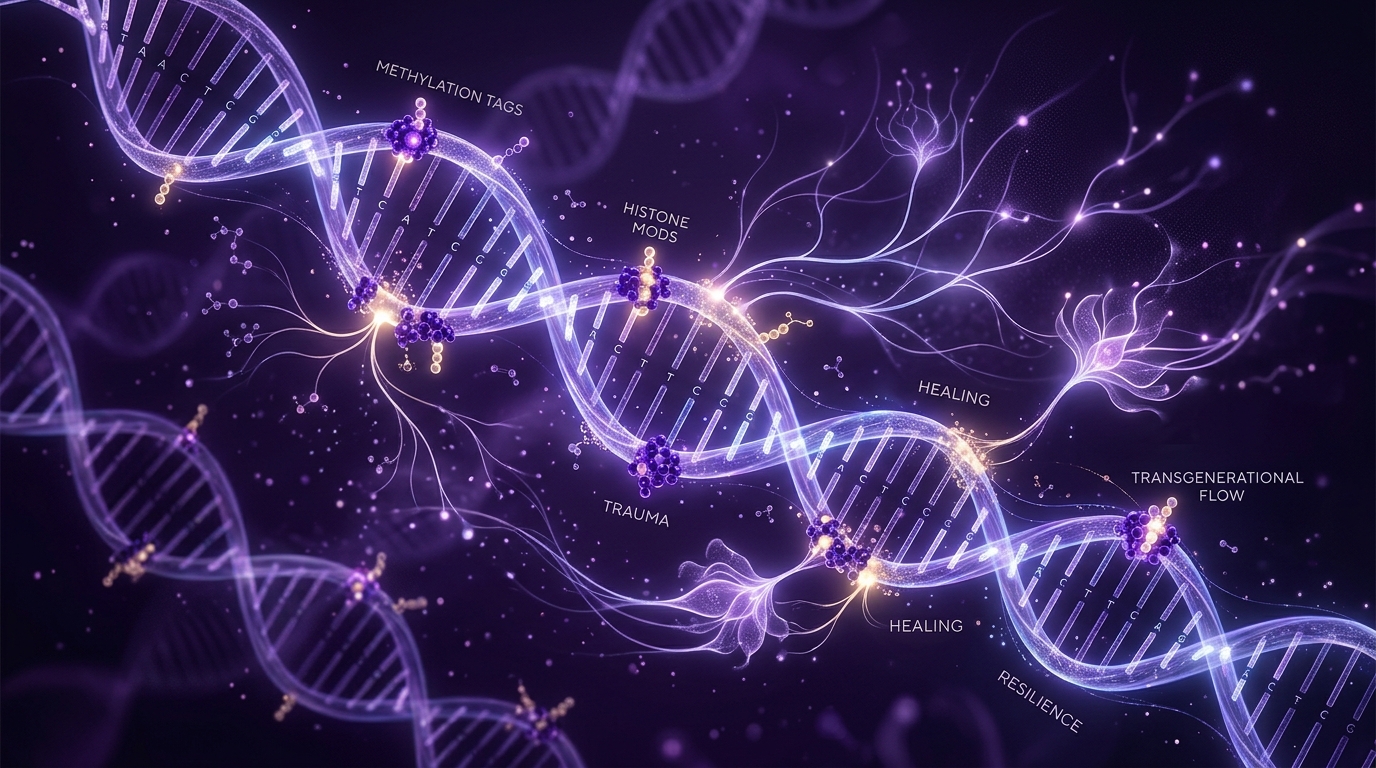
Epigenetics pulls the trigger: how generational trauma and environment activate our molecular vulnerabilities.
“Don't ask why the addiction, ask why the pain.” — Dr. Gabor Maté
Collective Trauma and the HPA Axis
Enter Portal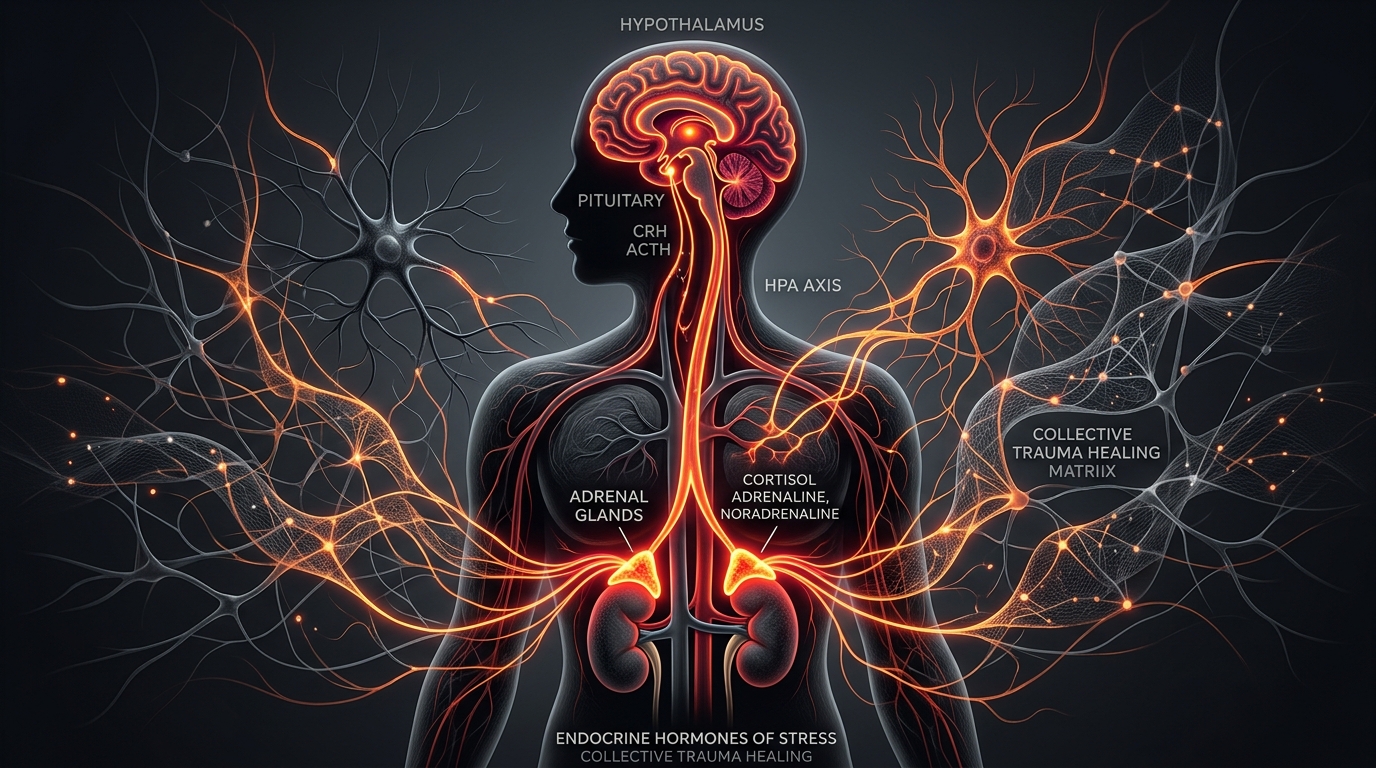
Systemic chronic stress deranges the Hypothalamic-Pituitary-Adrenal axis, forcing the brain into permanent survival mode.
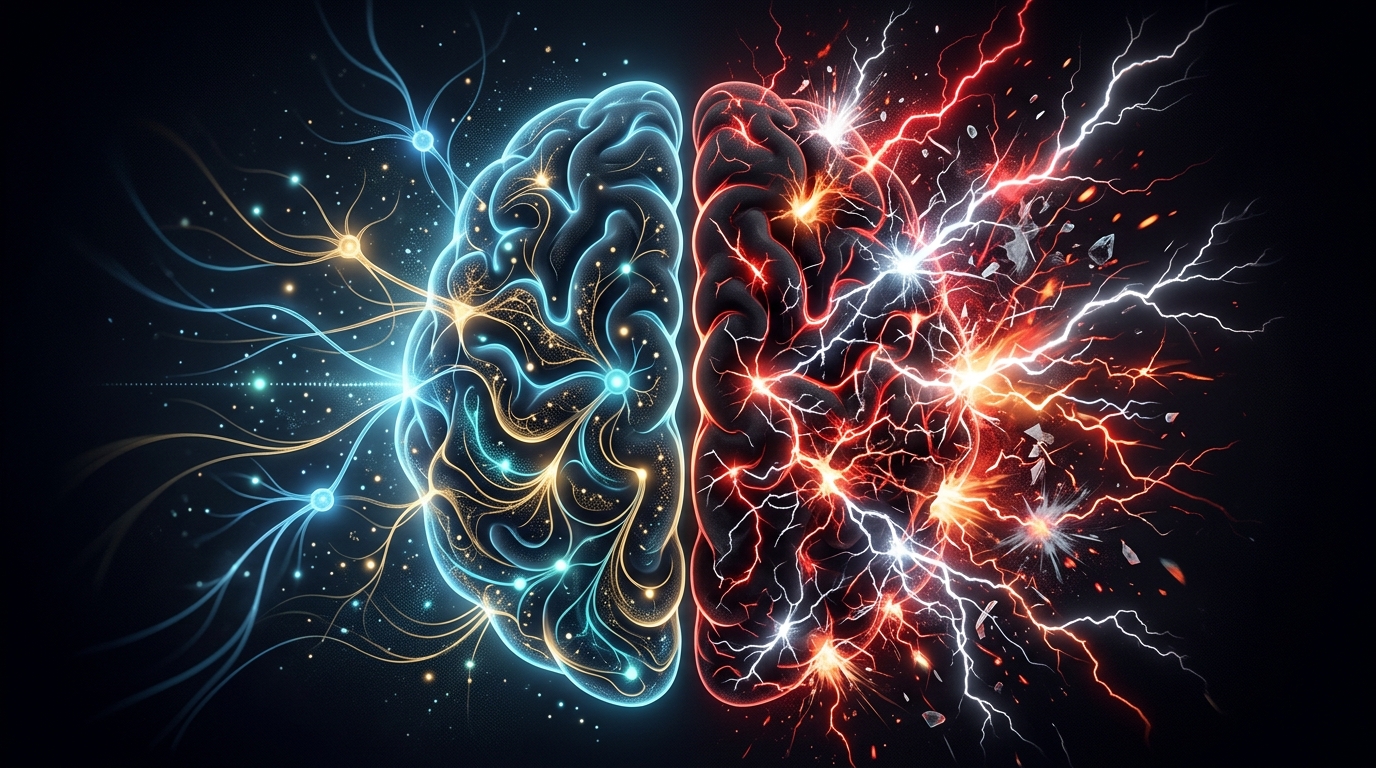
The Brain Seeking Balance
Explore the neural axis by moving your mouse. Click on the simulator to lock and investigate a specific state in detail.
The Spectrum of Neurochemical Hijacking
How substances interact with our neural network and the silent price each one demands.
Alcohol
The Sledgehammer
How it works
Acts as a chemical sledgehammer. Boosts the GABA system (sedating us and stopping thoughts) and triggers endorphin release.
The Price
Long-term, it destroys brain architecture, shrinks the liver, and, by converting to acetaldehyde, massively increases cancer risk.
Cannabis
The Rainbow Paint
How it works
Floods CB1 receptors, massively amplifying any stimulus. Colors are brighter, sounds deeper—everything is painted in rainbow.
The Price
To guard against overstimulation, the brain retreats its receptors (downregulation). Result? Amotivational syndrome, a gray life.
Stimulants
The Laser
How it works
Cocaine, amphetamines, and MDMA act like a laser: concentrating energy by blocking the dopamine and serotonin cleanup system.
The Price
Total depletion of reserves. MDMA can physically damage serotonergic axons, potentially causing clinical depression and memory issues.
The Road Back to the Light
An integrated biological and spiritual approach to neurochemical restoration. Select a portal to explore the depth of the process.
The Medical Shield
How science utilizes Naltrexone and Suboxone to reduce the chemical noise of withdrawal and provide the prefrontal cortex with sacred decision space.
Neuroplasticity
The neurobiological value of presence and the 'one day at a time' strategy. How we reshape our brain through new habits, BDNF, and reducing rumination.
The opposite of addiction is not sobriety. It is human connection.
Furthermore, the essential theme of our existence is that humans live in symbols. We find meaning in the stories we tell ourselves, the rituals we keep, and the tribes we belong to. Addiction thrives precisely when these symbolic structures collapse. When we are left bare in a vacuum of meaning and technological loneliness, we artificially seek that shred of relief. The path to healing is restoring the symbolic architecture: from human to human, from heart to heart.
Beyond the Ego.
Toward Ecstasy.
The mind heals not by raising walls, but by expanding its own boundaries. Select a portal on the right to travel, or use the tuner for alignment.
Interactive Consciousness Tuner
Long press the sphere below to synchronize your neurochemistry and trigger a transcendence explosion.
Pleasure (The Body)
Enter PortalExternal dependence. Strengthens the ego through enslavement to objects. Red/orange vibrations.
Happiness (The Mind)
Enter PortalCompetition and cunning. Fear of loss poisons all external success. Orange waves.
Joy (The Soul)
Enter PortalAbsolute independence. Ego dissolution begins through silence and inner peace. Deep gold.
Ecstasy (The Divine)
Enter PortalNirvana. The ego disappears completely; only the Infinite remains. Absolute cosmic innocence.